Who Are the Top China Arthroscopy Knee Surgery Suppliers?

China’s arthroscopy knee surgery market includes manufacturers and suppliers of scopes, cameras, shavers, pumps, instruments, and complete operating-room systems. But “top” should not mean simply the biggest catalog or lowest price. A dependable supplier must show clear product specifications, consistent quality controls, responsive technical support, and credible evidence for its claims. These details matter when a camera system is being assessed for image clarity or a shaver handpiece must fit an existing setup.

Clinical needs should guide the comparison. Dr. Freddie Fu, an orthopedic surgeon known for his work in knee ligament surgery, emphasized patient-specific anatomy and function throughout his clinical and research work. A fair paraphrase of that principle is: “Choose treatment around the knee and the patient, not the device alone.” This is a paraphrase, not a verified verbatim quotation. Supplier selection deserves the same care.

This overview examines how to assess China-based suppliers without treating marketing claims as proof. It considers product range, manufacturing transparency, service capacity, documentation, and communication. Buyers should verify current certifications and regulatory status for their own markets; requirements can differ. Ask for supporting records. Check the details. A polished brochure cannot replace a careful review. Nor can a supplier’s location alone establish quality. The comparison may still miss important differences, especially when public information is limited. That uncertainty should be stated, not hidden. The aim is a practical shortlist for further evaluation, not a clinical recommendation or an unsupported ranking.
Who Are the Top China Arthroscopy Knee Surgery Suppliers?

What Arthroscopic Knee Surgery Involves and Which Devices It Requires

Arthroscopic knee surgery uses a narrow camera and instruments inserted through small skin incisions, often called portals. The camera sends images to a monitor, letting the surgeon inspect structures inside the joint. Small portals matter. Depending on the diagnosis, the procedure may involve trimming or repairing a meniscus, treating cartilage, or reconstructing a ligament. The plan varies with the injury and the patient.

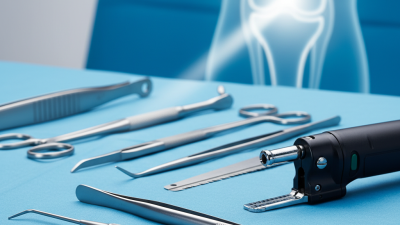
A typical setup includes an arthroscope, camera system, light source, monitor, and fluid-management equipment to keep the view clear. Surgeons may also use a probe to assess tissue, a powered shaver to remove or smooth tissue, and graspers or scissors for precise work. Not every case needs every device. Repair procedures may require implants such as sutures or fixation devices, selected for the specific anatomy and technique.

For hospitals comparing suppliers, practical checks include image clarity, reliable fluid control, compatibility among components, sterilization instructions, and access to trained technical support. A device list can look complete on paper and still overlook workflow details, such as tubing placement or setup time. Fit is not everything. Equipment should suit the surgical team’s training and the procedure planned, with maintenance and replacement parts considered before purchase.

How China’s Knee Arthroscopy Supplier Market Is Structured

Who Are the Top China Arthroscopy Knee Surgery Suppliers?

How China’s Knee Arthroscopy Supplier Market Is Structured

China’s knee arthroscopy supplier market is not one uniform group. It includes manufacturers of scopes and camera systems, makers of instruments, and suppliers focused on consumables such as cannulas and tubing. Some companies manage several product categories; others specialize in a narrow part of the operating-room setup. That difference matters when a hospital needs compatible equipment, not just a low-priced item.

OEM and contract manufacturers form another part of the market. They may produce devices for overseas customers, while trading and export firms coordinate product selection, documentation, and shipping. A supplier’s role should be confirmed directly. Ask who makes each component, where final inspection occurs, and which service arrangements apply in the destination market. A polished catalogue alone is not enough.

Look closely at practical details. Do instrument handles fit the intended workflow? Are image quality, sterilization instructions, packaging, and replacement-part access documented? Request current certificates and verify their scope with the issuing body. Compare sample records, warranty terms, and response times before placing an order. This market is not perfectly tidy: one supplier may excel at production but offer limited clinical support. A careful assessment of the full supply chain can reveal that gap.

Which Chinese Suppliers Stand Out in Knee Arthroscopy

Chinese suppliers stand out when they can show a complete, compatible knee arthroscopy system, not just a low instrument price. A useful setup includes a camera, light source, fluid pump, shaver, and durable hand instruments. Check that the quoted components work together and that replacement parts are available. Details matter.

Grand View Research estimated the global arthroscopy devices market at USD 5.5 billion in 2023, with a projected 6.6% annual growth rate from 2024 to 2030. This is a global forecast, not proof of any Chinese supplier’s performance. Buyers should compare model-specific registration records, ISO 13485 quality-system evidence, sterilization instructions, and service response times. Ask for a live demonstration using a knee model, then inspect image clarity, pump stability, and how smoothly the shaver operates. Service matters too.

For export-focused suppliers, clear technical files and consistent production records can make evaluation easier. Request references from hospitals or distributors using the same equipment configuration, and check how quickly the supplier handles repairs. A polished catalogue is not enough. I would also ask for the unglamorous details: spare-part lead times, training availability, and what happens when a component fails during a procedure.

Who Are the Top China Arthroscopy Knee Surgery Suppliers? — Which Chinese Suppliers Stand Out in Knee Arthroscopy

Supplier Category Typical Knee Arthroscopy Products Capabilities to Compare Documentation to Verify Relevant Standards and Regulatory Checks
Endoscope and visualization system suppliers Arthroscopes, camera heads, imaging units, light sources, and display components Image quality, compatibility among components, sterilization method, repair support, and availability of replacement parts Device registration details, instructions for use, sterilization guidance, and model-specific technical specifications Check applicable NMPA registration or filing requirements in China. For electrical medical equipment, verify applicable electrical safety and electromagnetic compatibility documentation.
Arthroscopy instrument suppliers Probes, graspers, punches, scissors, cannulas, and other manual instruments used in knee procedures Instrument range, material and finish, reusable or single-use status, cleaning access, and replacement availability Product catalogue, material information, validated cleaning and sterilization instructions, and registration documentation where applicable Verify that the product’s intended use and regulatory status match the proposed clinical application. Reusable devices require clear reprocessing instructions.
Shaver and powered-instrument suppliers Powered shaver systems, handpieces, cutting blades, and associated controls Handpiece performance, blade options, system compatibility, service response, and consumable supply continuity Model-specific operating instructions, compatibility lists, maintenance requirements, and applicable registration documentation For powered medical equipment, review applicable electrical safety and risk-management documentation, including relevant IEC 60601 and ISO 14971 requirements where applicable.
Irrigation and fluid-management suppliers Arthroscopy pumps, tubing sets, inflow and outflow accessories, and fluid-control components Pressure and flow control, disposable-set compatibility, setup requirements, alarm functions, and after-sales support Operating instructions, compatible accessory list, performance specifications, and device registration details where required Confirm that the complete system and its accessories are covered by the applicable regulatory documentation and intended-use claims.
Integrated operating-room solution suppliers Combination packages that may include visualization, instruments, powered tools, and fluid management System interoperability, installation and training, service coverage, package contents, and lifecycle costs Itemized quotation, product and accessory model list, warranty terms, training plan, and documentation for each regulated device Assess each device separately as well as the proposed integrated workflow; a package description alone does not establish regulatory approval for every component.
This table presents supplier categories and due-diligence criteria, not a ranked list of companies. Verify current product registrations, certificates, and scope directly through official records and supplier documentation before procurement.

How to Compare Suppliers’ Products, Quality, and Support

Compare knee arthroscopy suppliers through documented performance, not catalogue breadth. Check scope clarity, image stability, instrument compatibility, sterilization instructions, and repair turnaround. Ask for proof. Request current quality certificates, product traceability records, and clear acceptance criteria for each device. A 2024 WHO Global Patient Safety Report estimates that about one in ten patients experiences harm in healthcare. This is not an arthroscopy-specific rate, but it underlines why purchasing checks matter.

Assess quality using evidence that buyers can verify. Review inspection records, complaint handling, corrective-action procedures, and training materials. The FDA’s MAUDE database contains medical-device event reports, but the agency warns that reports cannot establish event rates or reliably compare devices. Treat them as signals, not rankings. Ask suppliers how they investigate reported faults and share corrective actions. Details matter.

Support should be tested before a contract is signed. Request a sample service plan covering response times, loaner equipment, spare parts, and staff training. During a demonstration, note whether the image remains clear when the scope moves through a fluid-filled model. Ask who handles troubleshooting after installation, and how quickly. A polished demonstration can still hide weak follow-through. Compare written commitments with references from hospitals using similar procedures. Some evaluation gaps will remain; record them rather than pretending the score is complete.

What Buyers Should Verify Before Choosing a Supplier

When comparing China-based arthroscopy knee surgery suppliers, verify what each company actually makes. A trading company may coordinate orders, while production happens elsewhere. Ask for the manufacturing address, quality-system certificates, and the legal name shown on product documents. Confirm that certificates are current and cover the specific product category and factory. Requirements vary by destination market, so check them with your regulatory team.

Ask for evidence tied to the instruments you plan to buy. Review specifications, material details, cleaning instructions, and sterilization validation where applicable. For sterile products, check packaging integrity data and lot-level traceability. Request sample records showing how a batch can be followed from incoming materials to shipment. Ask how nonconforming products are handled. Ask for evidence. A polished brochure is not enough.

Assess practical support before signing. Can the supplier explain instrument compatibility, replacement parts, lead times, and complaint handling in clear terms? Request a video demonstration or sample evaluation using your team’s actual workflow. Confirm who provides technical training and how quickly service requests receive a response. If possible, arrange an audit or an independent document review. That takes effort. I have seen buyers focus heavily on price and overlook repair access; it is an easy mistake, and one worth revisiting before placing a large order.