
Why Choose Reliable Knee Instruments for Hospitals?
Reliable knee instruments are central to safe, repeatable, and efficient orthopedic procedures in modern hospitals. Their quality affects alignment, tissue handling, operative time, and staff confidence. A dull saw guide or poorly fitting cutting block can create unnecessary delays. Small errors may become significant during complex knee replacement surgery.
Dr. James A. Rand, a recognized knee arthroplasty specialist, stated, “The goal of total knee arthroplasty is to restore function and relieve pain.” Reliable knee instruments support that goal by helping surgeons reproduce planned bone cuts and maintain accurate implant positioning. Their value extends beyond the operating table. Durable materials, clear markings, ergonomic handles, and consistent sterilization performance can reduce avoidable workflow problems.
Consistency matters most.
Hospitals also need traceable manufacturing, validated cleaning instructions, and responsive technical support. These details demonstrate professional responsibility under real clinical pressure. Still, no instrument can replace surgical judgment, proper training, or careful patient assessment. That limitation deserves attention. Even premium knee instruments may perform poorly when staff overlook inspection, maintenance, or compatibility requirements.
Choosing reliable equipment therefore requires more than comparing prices. Procurement teams should review clinical feedback, product testing, warranty terms, and long-term service records. Surgeons and sterile processing staff should also evaluate the instruments together. Their daily experience can reveal weaknesses that product brochures miss. A practical decision combines evidence, usability, and honest reflection. The best knee instruments are not merely sharp or attractive. They should remain dependable when time is limited, visibility is difficult, and every millimeter matters.
Understanding the Role of Knee Instruments in Hospital Care
Why Choose Reliable Knee Instruments for Hospitals?
Understanding the Role of Knee Instruments in Hospital Care
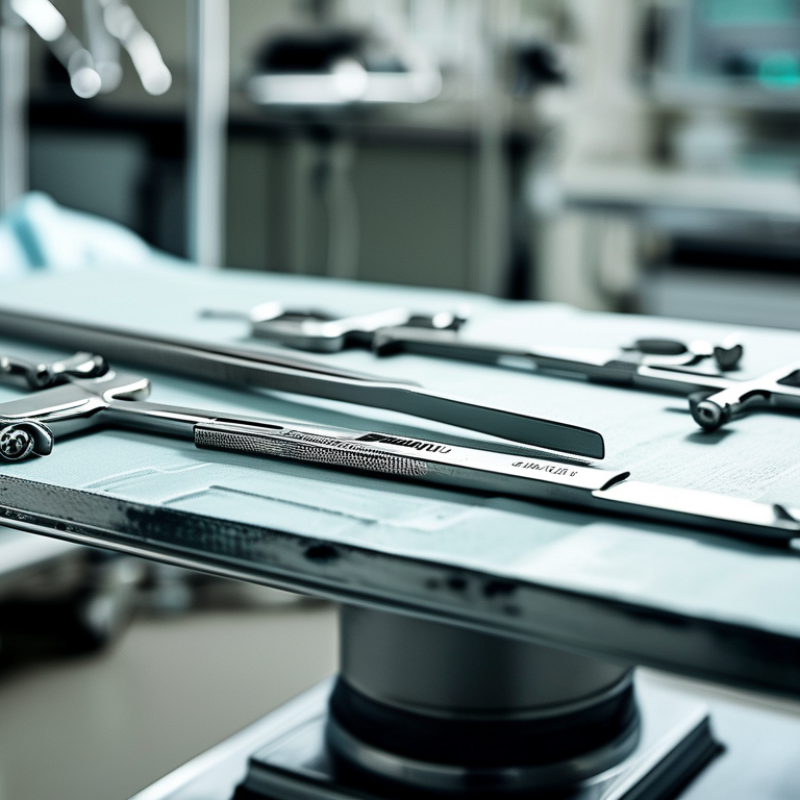
Knee instruments support much more than a single operation. They help orthopedic teams examine joints, prepare tissues, position implants, and assess movement. Their accuracy can influence surgical control and patient safety. In a busy hospital, even a small alignment error may affect the procedure.
Reliable instruments provide stable handling during demanding moments. Balanced forceps reduce hand fatigue. Clear markings help surgeons confirm depth and angle. Strong retractors maintain exposure without unnecessary tissue pressure. Instruments must also tolerate repeated cleaning, sterilization, and inspection without losing precision.
In daily hospital care, instrument quality depends on the entire system. Staff need documented maintenance, traceable inspection records, and practical training. A complete tray should contain the correct sizes, not simply familiar tools. Missing one guide can delay a procedure.
Sterile processing teams also play a central role. They check hinges, cutting edges, locking parts, and surface damage. Tiny cracks can retain contamination. They are easy to miss.
No instrument is flawless. Wear can appear gradually, especially around joints and serrated edges. Hospitals should review usage data and replace tools before failure becomes visible in the operating room. This requires honest reporting, not blame.
Clinical teams should also question routine habits. A tool may be technically sound but poorly suited to a surgeon’s technique. Regular feedback between surgeons, nurses, technicians, and procurement staff improves instrument selection. That conversation protects consistency across diagnosis, treatment, and recovery.
| Instrument Category | Typical Examples | Primary Clinical Role | Important Reliability Attributes | Common Risk if Performance Is Poor | Hospital Care Value |
|---|---|---|---|---|---|
| Bone-Cutting Instruments | Oscillating saw blades, reciprocating saw blades, osteotomes and bone chisels | Cutting, shaping or removing bone during knee procedures | Consistent cutting geometry, adequate hardness, secure attachment and resistance to corrosion | Irregular cuts, increased operating time, excessive heat generation or instrument breakage | Supports accurate preparation of the surgical site and helps maintain procedural efficiency |
| Bone-Holding Instruments | Bone-holding forceps, reduction forceps and pointed reduction clamps | Holding, aligning and stabilizing bone fragments or prepared surfaces | Strong jaws, reliable locking mechanism, controlled grip and smooth movement | Loss of fixation, tissue damage or repeated repositioning during surgery | Improves handling control and can reduce unnecessary manipulation of tissues |
| Retractors | Self-retaining retractors, Hohmann retractors and soft-tissue retractors | Maintaining surgical exposure while protecting surrounding tissues | Stable positioning, atraumatic edges, suitable strength and easy adjustment | Unstable exposure, pressure-related tissue injury or accidental displacement | Promotes a clear operative field and supports consistent surgical workflow |
| Grasping and Holding Instruments | Allis tissue forceps, surgical clamps and holding forceps | Handling soft tissue, drapes, sutures or small surgical components | Precise jaw alignment, secure ratchet action and smooth, controlled handling | Slippage, tissue trauma, contamination risk or damage to delicate materials | Enhances control during preparation, exposure and closure |
| Measuring and Alignment Instruments | Depth gauges, alignment guides, sizing guides and calipers | Assessing dimensions and supporting alignment during knee procedures | Clear markings, dimensional accuracy, stable interfaces and repeatable positioning | Incorrect sizing or alignment, which may affect fit and surgical outcome | Supports standardized decision-making and reproducible surgical steps |
| Drilling and Preparation Instruments | Drill guides, drill bits, reamers and preparation guides | Creating or preparing precisely located holes and surfaces | Concentric geometry, sharp working surfaces, secure guidance and wear resistance | Misaligned preparation, poor fit, increased debris or prolonged procedure time | Helps maintain procedural accuracy and compatibility with the planned technique |
| Trialing and Insertion Instruments | Trial components, impactors, extraction tools and insertion handles | Testing fit and positioning, or assisting with controlled component insertion | Secure connections, impact resistance, balanced weight and easy identification | Component damage, unstable handling or difficulty correcting positioning | Facilitates controlled assessment and reduces avoidable handling errors |
| Sterilization and Maintenance Features | Instrument trays, cleaning accessories and validated sterilization arrangements | Supporting cleaning, inspection, sterilization and organized storage | Drainable surfaces, accessible joints, clear identification and compatibility with the hospital's validated process | Retained soil, inadequate sterilization, corrosion or missing instruments | Supports infection-prevention practices and improves operating-room readiness |
| Ergonomic Design | Textured handles, balanced instruments and color or size identification systems | Improving grip, instrument recognition and user control | Comfortable grip, balanced weight, low hand strain and intuitive operation | Handling fatigue, reduced precision or slower instrument exchange | Supports staff efficiency and consistent performance during lengthy procedures |
| Quality and Traceability Controls | Inspection records, maintenance logs and instrument tracking labels | Monitoring condition, location, service history and readiness for use | Documented inspections, clear identification, repair criteria and lot or set traceability | Unnoticed wear, incomplete sets, delayed replacement or avoidable case interruptions | Strengthens inventory control, preventive maintenance and patient-safety processes |
Note: Reusable knee instruments should be cleaned, inspected, maintained, packaged and sterilized according to the applicable hospital procedures, manufacturer instructions for use and validated reprocessing requirements.
Related Posts
-
Top Knee Instruments for Effective Surgical Procedures?
-

10 Best Things You Should Know About Knee Replacement Surgery?
-

2026 Best Orthopaedic Surgeon in Brighton for Your Joint Health?
-

What is an Orthopaedic Surgeon in Sydney and What Do They Do?
-

Top Questions About Roger Brighton Orthopaedic Surgeon Services?
-

Top Medical Surgeon Traits for Successful Surgical Specialists?