
What Is the Best Knee Replacement System in 2026?

In 2026, choosing a knee replacement system can feel like comparing dozens of similar names, materials, and design claims. Yet the “best” option is not a trophy awarded to one brand. It is the system that fits a patient’s anatomy, health, and goals, and that a qualified surgeon can implant reliably. No universal winner exists.

A knee replacement system includes more than the implant itself. Design, materials, fixation method, and surgical approach can all shape the decision. So can bone quality, activity level, allergies, prior procedures, and other health conditions. That matters. A system suited to one person may not be right for another, even when both hope to walk farther or return to everyday routines.

This guide examines how to assess systems using practical criteria, including evidence on implant durability, documented outcomes, and the surgeon’s experience with a particular design. It also explains why newer features do not automatically mean better results. The evidence is useful, but not always tidy: studies may compare different patient groups or follow people for different lengths of time. Readers should discuss options with an orthopedic surgeon who knows their case, and ask what evidence supports the recommendation. The aim is not to name a universal champion, but to help patients ask clearer questions and weigh benefits, limits, and uncertainty before making a shared decision.
What Is the Best Knee Replacement System in 2026?

What a Knee Replacement System Includes

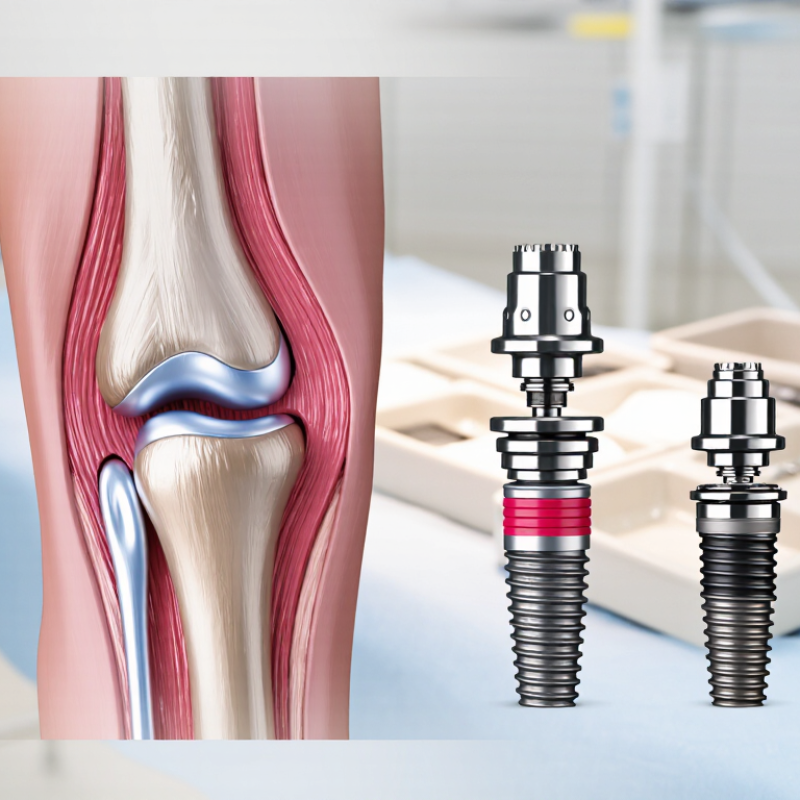
A knee replacement system is more than the visible metal parts. In a total knee replacement, it usually includes a metal femoral component, a tibial baseplate, and a durable plastic insert that cushions movement. A small patellar component may be used when the surgeon resurfaces the kneecap. Fixation may use bone cement or rely on bone growing onto a porous surface. The system also includes sizing guides and surgical instruments that help position components and balance the knee’s soft tissues. Small alignment differences matter.

The right combination depends on anatomy, bone quality, ligament stability, and the surgeon’s assessment—not a single “best” design for everyone. Evans and colleagues’ 2019 Lancet systematic review of national joint-registry data estimated that about 82% of total knee replacements remained unrevised at 25 years. That figure measures revision-free survival, not pain relief or normal movement, and it cannot predict one patient’s result.

Some details remain hard to compare: registry data cover different implant designs, surgical techniques, and patient groups. That uncertainty deserves attention.

Ask which components are planned, how they will be fixed, and why that approach fits your knee.

Major Types of Knee Replacement Systems

In 2026, the best knee replacement system is the one suited to a person’s joint damage, bone quality, and daily needs. Major types differ by how much of the knee they replace. A total knee replacement resurfaces the main joint compartments. A partial replacement treats damage limited to one compartment, leaving more healthy bone and tissue in place. It is not suitable for every knee. When arthritis is mainly behind the kneecap, a patellofemoral replacement may be considered.

Implants also vary in design and fixation. Some use a fixed plastic bearing; others allow limited movement within the joint. Certain designs retain the posterior cruciate ligament, while others substitute for its function. Fixation may use bone cement, or a cementless surface designed for bone growth. These are not simple upgrades from one option to another. A surgeon weighs examination findings, X-rays, ligament stability, and surgical experience. The categories can blur, and no design guarantees a faster recovery or longer-lasting result. Details matter.

Tips: Ask which compartments are damaged and why a proposed system fits your anatomy. Discuss risks, expected rehabilitation, and the surgeon’s experience with that procedure. Bring a list of medicines and health conditions. Compare explanations, not advertising claims. If the choice still feels unclear, ask for another clinical opinion.

How Knee Replacement Systems Differ

Knee replacement systems differ in how they fit, move, and attach to bone. Some designs preserve more of the patient’s natural ligaments; others provide extra stability when those ligaments are damaged or unreliable. The right choice depends on the knee, not just the label. Fit matters.

Materials also vary. Many systems pair a metal component with a durable plastic bearing, while designs differ in shape, thickness, and how the bearing moves. A fixed bearing stays in place; a mobile bearing can rotate slightly. Neither option is automatically better for everyone. Small differences can affect motion and stability, but surgical technique and accurate positioning matter too.

Surgeons consider X-rays, bone quality, ligament function, pain, and daily activities when comparing options. A person who walks on level ground may have different needs from someone who regularly climbs steep stairs. The surgeon’s experience with a system can also matter. It’s easy to overfocus on implant features. Recovery, overall health, and rehabilitation influence results, and no design can guarantee a particular outcome. Good questions include how a system suits your anatomy and what trade-offs it offers. I’d be cautious about any claim that one design is best for every knee.

Factors Used to Compare Systems in 2026

A knee replacement system should be compared by how well its design suits a patient’s anatomy, activity level, and bone quality—not by a single headline claim. Surgeons may assess implant shape, available sizes, materials, and how the components are fixed to bone. Some designs preserve more of the patient’s natural knee structures; others use different approaches. The right choice depends on clinical findings.

Fit matters. So does alignment. A component that looks suitable on a scan still needs to work with the patient’s ligaments, movement, and surgical plan. Ask how the surgeon evaluates these factors and what trade-offs apply. Familiarity with a system can also matter, since surgical experience may affect planning and consistency. No design removes every risk.

Compare reliable clinical evidence, including reported pain, function, revision rates, and length of follow-up. Short-term results alone may not show how an implant performs over many years. Rehabilitation needs and access to follow-up care deserve attention, too. Published studies have blind spots: patient groups and methods can differ, making direct comparisons imperfect. A neat scorecard can mislead. Discuss personal risks and expected recovery with an orthopedic specialist who can review your imaging and health history.

What Is the Best Knee Replacement System in 2026? - Factors Used to Compare Systems in 2026

Comparison factor Common options or measures What to compare How to interpret it
Fixation method Cemented, cementless, or a combination of fixation methods How the components are secured to bone; patient bone quality; and revision outcomes for similar patients Cementless fixation depends on bone growing onto the implant surface. Neither approach is best for every patient.
Bearing design Fixed-bearing or mobile-bearing polyethylene insert Insert design, stability, wear-related outcomes, and revision results over comparable follow-up periods Both designs are used in knee replacement. A design feature alone does not establish better pain relief or longer implant life.
Constraint and ligament management Cruciate-retaining, posterior-stabilized, or more constrained designs Whether the posterior cruciate ligament is retained, and whether the design suits the patient’s ligament balance and knee stability The appropriate level of constraint depends on anatomy, ligament function, and surgical findings.
Materials and surfaces Metal components, commonly cobalt-chromium or titanium alloys; polyethylene bearing inserts; varied surface treatments Material composition, documented wear or loosening outcomes, and any relevant allergy or sensitivity history Material claims should be assessed using clinical evidence and the patient’s circumstances, not laboratory claims alone.
Alignment strategy Mechanical alignment, kinematic alignment, or modified approaches Planned alignment, patient selection, accuracy of implementation, and patient-reported outcomes Alignment is a surgical strategy as well as a planning choice; evidence and suitability depend on the individual case.
Computer-assisted or robotic support Conventional instrumentation, navigation, or robotic-assisted planning and execution Accuracy, operating workflow, complications, patient-reported results, and revision outcomes These are surgical tools, not implant materials. Greater technical precision does not by itself prove better long-term outcomes.
Revision and survivorship evidence Revision rates at stated follow-up points, such as 5 or 10 years; registry and peer-reviewed study data Same implant type, similar patient groups, comparable follow-up, and clear definitions of revision Longer follow-up is informative. Results from different populations or follow-up periods should not be compared as if they were equivalent.
Pain, function, and satisfaction Validated patient-reported measures, functional tests, and satisfaction surveys Preoperative and postoperative scores, follow-up timing, response rates, and clinically meaningful change A technically successful implant may not eliminate all pain or restore every activity; expectations and rehabilitation matter.
Surgeon experience and availability Experience with the specific design and technique; local access to compatible components and follow-up care Surgeon’s procedure volume, familiarity, and ability to manage complications or future revision A suitable system must also be one the surgical team can use appropriately and support over time.

There is no single knee replacement system that is best for everyone. The most appropriate choice depends on the patient’s anatomy, bone quality, ligament function, health, goals, and the surgeon’s clinical judgment. This table is a comparison framework, not a personalized medical recommendation.

How Surgeons Match a System to a Patient’s Needs

The best knee replacement system is the one that fits a patient’s anatomy, stability needs, and daily demands—not a universal “top” model. Surgeons assess X-rays, bone quality, ligament balance, deformity, pain, and activity goals. A patient who walks on uneven trails may need different stability considerations than someone focused on comfortable movement around the home. Medical conditions and prior surgeries can also affect planning. Small details matter.

The American Joint Replacement Registry’s 2024 Annual Report covers more than 3.7 million submitted hip and knee procedures, supporting ongoing tracking of implant use and outcomes. Registry data can inform discussion, but it cannot predict one person’s result or name a best system for everyone. Surgeons also weigh design features, surgical approach, and their experience with a device. That judgment is not perfect. It should be discussed openly. Ask how the proposed system suits your anatomy, what alternatives exist, and how the surgeon monitors outcomes and complications. A second opinion may help when the reasoning remains unclear.