How to Choose Paper Takeaway Containers for Your Business?
Choosing Paper Takeaway Containers is more than picking a box from a supplier’s catalogue. The right container should suit your menu, portion sizes, delivery times, and budget. A curry can seep through a weak seam. A crisp sandwich can turn soft when trapped steam has nowhere to go. Small details matter. So does the customer opening the package at their desk or kitchen table.
Sustainable-design expert William McDonough is associated with the principle, “Waste equals food.” It offers a useful prompt: consider what happens to packaging after the meal, not only how it looks on the counter. This guide will help you compare paper grades, coatings, shapes, closures, and insulation needs. It will also cover food compatibility, stacking, storage space, and practical supplier questions. Ask for samples. Test them with your actual portions and sauces, then check how they hold up during a realistic delivery. A container that works for a dry pastry may fail with hot noodles. There is no perfect choice for every menu. Some trade-offs remain, and they deserve a closer look before you place a bulk order.
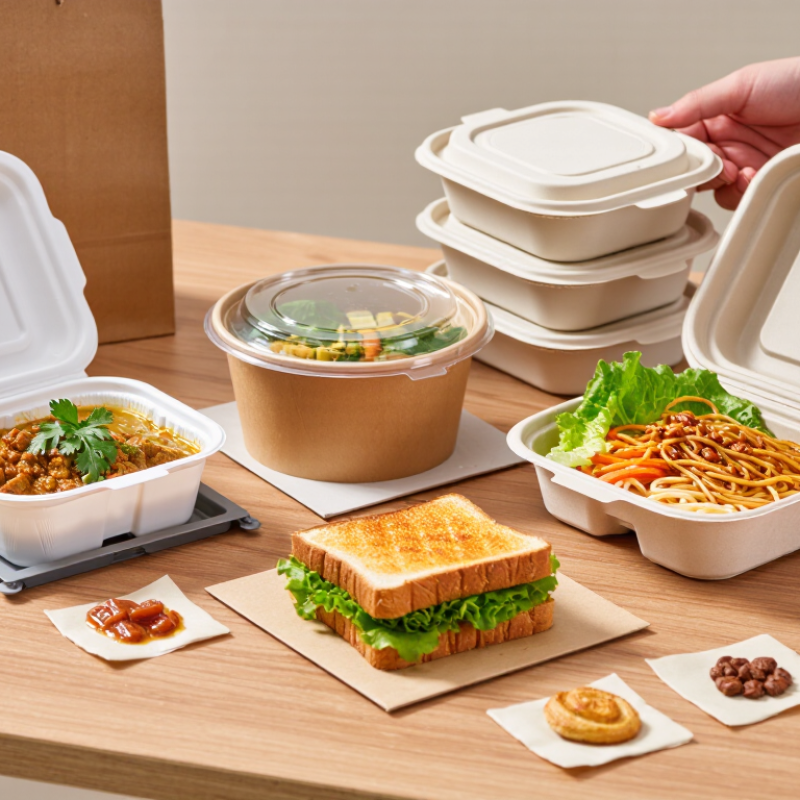
Assess Your Menu, Portions, and Service Requirements
Start with the food, not the container size. Separate your menu into practical groups: dry snacks, sauced meals, fried items, and drinks or soups. A crisp pastry needs room to avoid being crushed, while a curry needs a secure base and a lid that resists leaks. That matters. Check how much space each regular portion takes, including garnishes and sides. Leave enough headroom to close the container without pressing food against the lid. A portion that looks right on a menu may fit differently once packed.
Think about what happens after packing. Hot, moist food can soften paper, and trapped steam can make fried food lose its crunch. Venting may help, but it can also let heat escape. Test a filled sample with your actual food and typical delivery time. Check for leaks, soggy corners, and lids that shift when stacked. A simple test. Also consider the pace of service: staff should be able to open, fill, and close each container quickly during a busy rush. Paper thickness alone does not tell the whole story; construction and any food-contact lining matter too. Follow supplier guidance for the intended foods. Your first choice may be imperfect, so adjust after watching real orders travel.
Compare Paper Materials, Coatings, and Barrier Performance
Choosing paper takeaway containers starts with the food, not the appearance. Sturdy paperboard suits sandwiches and baked goods, while molded fiber can hold heavier meals. Check the rim and base: a thin base may soften under hot, wet food. Small details matter. A secure lid also helps prevent spills during delivery.
Coatings shape barrier performance. A plastic lining can resist moisture and grease, but may affect how the container is sorted after use. Water-based coatings vary, so ask suppliers for test data on heat, oil, and liquid exposure. A “compostable” claim does not guarantee acceptance everywhere. Match the material to actual disposal options and customer use. It is easy to focus on a clean sample; real meals can behave differently.
Tips: Test containers with your own menu. Leave hot curry or oily fries inside for the typical delivery time, then check for leaks, soft spots, and lid fit. Compare results before ordering in bulk. If one option works for fries but struggles with saucy noodles, that trade-off deserves a second look.
Select Container Shapes and Sizes for Each Menu Item
Choose paper takeaway containers by matching their shape to the food, not just the portion size. A shallow, wide box suits sandwiches, pastries, and foods that should stay visible and easy to reach. A deeper bowl works better for salads, rice dishes, and meals with several components. For saucy or oily foods, check that the container has a secure closure and a suitable lining. Paper is not automatically leakproof.
Measure a typical serving before ordering. Leave enough room for toppings and avoid packing food so tightly that the lid presses against it. A container that is too large can let food slide around; one that is too small may squash a crisp coating. Test with real portions. Menu photos can be misleading.
Tips: Test hot and cold dishes. Check stacking, lid fit, and how the container feels after a short delivery ride. Keep a few sizes; one size rarely fits everything.
Some details only show up during service. Steam can soften paper, and a snug lid may trap moisture that affects crispness. Try a small batch during a busy shift, then adjust the shape or size based on spills, presentation, and how easily staff can pack each order.
Check Food Safety, Sustainability, and Local Regulations
Before choosing paper takeaway containers, test them with your actual menu. Hot broth, oily noodles, and chilled salads stress packaging differently. A container that holds dry pastries may soften under a saucy meal. Ask suppliers for food-contact documentation and test samples with hot food for leaks, odor, and lid fit. Small details matter.
The U.S. Environmental Protection Agency’s 2018 Facts and Figures report estimates that 41.9 million tons of paper and paperboard containers and packaging were generated in the United States; 20.2 million tons were recycled. That is about 48 percent. These figures cover a broad packaging category, not takeaway containers alone. Still, they show that paper does not automatically become recycled after use. Check whether local facilities accept grease-stained or coated packaging. A paper lid can look sturdy and still soften during a long delivery. Not always.
Check current food-contact rules where your business operates. In the United States, relevant FDA requirements include provisions in Title 21 of the Code of Federal Regulations; other countries and local authorities may set different rules. Ask for material specifications, test records, and clear information about coatings or added substances. Also verify local restrictions on substances such as PFAS, plus rules for compostability claims and collection. I would not treat “compostable” as a universal promise; local access and acceptance determine what happens next.
Test Samples and Compare Supplier Costs and Reliability
Before ordering paper takeaway containers, test samples with the food you actually sell. A dry container tells you little about hot noodles or oily pastries. Fill each sample, close it, and leave it on a counter for twenty minutes. Check for softened corners, grease marks, and lids that shift during a short walk. Small details matter.
Record the results, even if the test feels informal. Note container size, stack height, and how easily staff can open and close each lid. Ask suppliers for pricing at several order quantities, including shipping, setup fees, and sample costs. The lowest unit price may not be the cheapest choice if damaged stock or late deliveries disrupt service. Compare written lead times with your busiest ordering periods.
Reliability takes checking. Ask how suppliers handle production delays and whether material specifications stay consistent between batches. Request references or recent quality records when available. Then place a modest trial order before committing to a large quantity. It may feel slower. Still, a few imperfect samples can reveal issues that a polished quote will not. My own test notes are not always tidy, but recording even one leak or loose lid helps make the next decision more grounded.